On 13th and 14th February 2014,
Scobbers Danny and Kin Guan were invited by National Geographic Channel to
follow Dr Neil deGrasse Tyson around in Singapore.
Yes, you heard it right. The sexiest astrophysicist in the
world, the guy who made many kids cry by demoting Pluto to a dwarf planet, the
frequent guest on The Daily Show and The Colbert Report, and the meme
immortalized online.
 |
| Image Credit: knowyourmeme.com |
He came to Singapore to promote his newest TV documentary
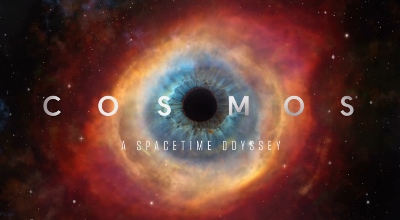
series COSMOS: A Spacetime Odyssey. This
13-part series, combining drama, fantasy and stunning natural reality, is the
follow-up of Carl Sagan’s classic COSMOS:
A Personal Voyage produced thirty years ago. Covering a wide range of
scientific topics such as the origin of life and the universe, Sagan did a
terrific job in communicating science to a wide public audience. The programme
has been broadcast in more than 60 countries and seen by over 500 million
people.
 |
| Image Credit: Wikipedia |
It was such a precious legacy left by Sagan to us. Since his
death in 1996, his widow Ann Druyan has been trying to create a new version of
the series. Together with Dr Tyson and Seth MacFarlane (yes, the Family Guy), she managed to secure
funding and TV channel (Fox TV) for the show.
In Southeast Asia, the first episode
“Standing Up In the Milky Way” will premiere on simulcast across
National Geographic Channel (NGC), NGC HD, Nat Geo WILD, Nat Geo People, as
well as FOX, FX, and FOXCRIME. Danny and
Kin Guan, along with other media representatives, had the privilege to watch it
during the press conference and media preview on Thursday (13
th
February) held at ArtScience Museum.
.jpg) |
| Image Credit: National Geographic Channel |
.jpg) |
| Image Credit: National Geographic Channel |
Free from the shackles of time and space,
Neil tells us the story of humankind and universe in his signature Ship of the
Imagination. We were all amazed by the stunning visual effects and the
splendorous views. The concept of compressing the whole history of the universe
into one year opens up our eyes and mind – Human is so insignificant when
placed in such a long scale of time. This is what Neil calls a “Cosmic Year”.
For example, in the last second of the Cosmic Year (31 December, 23:59:59),
human firstly observed the Moon in telescope and landed on it (which spans 400 years in real time)!
 |
| Image Credit: National Geographic Channel |
Ann Druyan pointed out that the major differences between
the old and new series are the cinematic experience and elements of skepticism.
She mentioned that one 9-minute scene where the viewers are plunged into the
heart of Titan, Saturn’s largest Moon. She believes that this new addition to
the series will surely amaze the generations and beyond.
 |
| Image Credit: National Geographic Channel |
 |
| Image Credit: National Geographic Channel |
When asked how the rise of social media affects the science
education for young generation, Neil was not worried over the phenomenon. Being
an avid user of Twitter having 1.6 million followers, he found that the social
media is not distraction at all. On the contrary, the power of visual splendour
and storytelling bestowed by social media is staggeringly huge and provides an
uplifting force to the society.
The last question asked was on his wrestling stint in
Harvard: If he chose the road not taken and became a wrestler, what would be
his ring name? The answer, of course, is related to astronomy. One very special
property about the Moon is that it always faces the Earth with the same side.
This effect, called “
tidal locking”, can be true in the other way too! When the
Earth faces the Moon with the same side, the phenomenon is called “double tidal
lock”. Voilà, that’s Neil’s ring name and signature move.
 |
What a menacing move from Neil the wrestler! "Double Tidal Lock"
Image Credit: National Geographic Channel |
For a more detailed Q & A, please check out the
blog post (
link) on Science Centre website written by Danny!
Cosmos: A Spacetime Odyssey premieres on 15th March, 10pm (SG time), on the National Geographic Channel (SingTel mio TV Ch. 201 & StarHub TV Ch. 411). Don’t miss it!
 |
| Image Credit: National Geographic Channel |